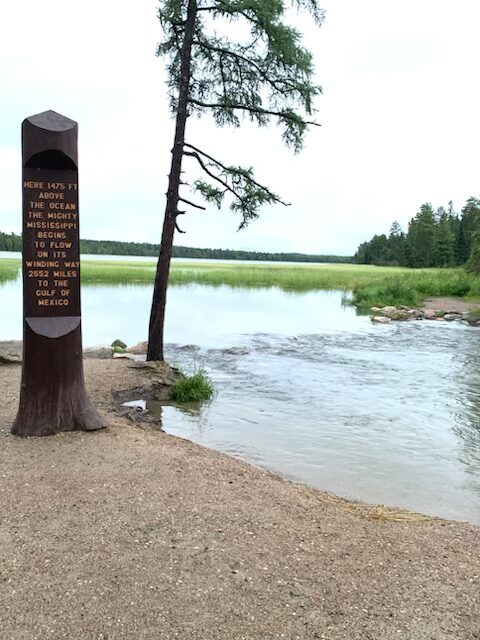
Today we’re heading to one of the crown jewels of Minnesota’s state park system — a place that holds a distinction unlike any other in the entire state, and honestly, unlike almost any other place in the entire country. We’re talking about Itasca State Park, and if you’ve never been, you’re in for a story that spans billions of years of geology, more than a century of conservation history, and one of the most iconic moments you can have in the Upper Midwest — stepping across the headwaters of the Mississippi River on a handful of stepping stones. Yes, the mighty Mississippi. It starts right here, in the quiet forests of northern Minnesota.
Itasca State Park is located in Clearwater County in north-central Minnesota, about 21 miles north of Park Rapids. It covers just over 32,000 acres, making it one of the largest state parks in Minnesota. The terrain is classic northern Minnesota — ancient glacial lakes, dense forests of pine and hardwood, wetlands teeming with wildlife, and that unmistakable north woods quiet that reminds you why you left the city behind. The park sits within the Itasca moraine, a landscape sculpted by glaciers over the last ice age, and it’s home to more than 100 lakes, including beautiful Lake Itasca itself.
This park is a great fit for just about everyone. Hikers will love the trail system, including one of the most stunning drives and walks in the state. Paddlers and boaters will find plenty of water to explore. History lovers will have a field day with the deep and fascinating backstory of this place. Birdwatchers, wildlife enthusiasts, campers, cabin seekers — Itasca delivers across the board. And if you happen to be traveling in the winter, the park has some surprises for you too.
History of Itasca State Park
Ancient Geology
The story of Itasca State Park really has two beginnings — one that goes back about 12,000 years, and one that starts in the mid-1800s with one of the most famous geographical mysteries of the 19th century.
During the last ice age, glaciers covered virtually all of Minnesota. As those glaciers advanced and retreated over thousands of years, they carved out the landscape we see today — the rolling hills, the depressions that became lakes, the ridges left behind as the ice melted. The Itasca region sits atop what geologists call the Alexandria Moraine complex, and the lakes here, including Lake Itasca, were formed in the hollows left behind by retreating glacial ice. Some of the bedrock in this region is among the oldest exposed rock on Earth, including formations of ancient Precambrian rock that date back over two billion years. So when you’re standing at the headwaters, you’re standing on some seriously ancient ground.
The Search for the Mississippi’s Source
For centuries, the source of the Mississippi River was one of the great unsolved mysteries of North American geography. The river, which stretches nearly 2,400 miles from its source to the Gulf of Mexico, was so massive and so vital to the continent that people desperately wanted to know where it began. Multiple expeditions were launched in the early 1800s trying to solve the puzzle. Zebulon Pike attempted it in 1805. Lewis Cass led an expedition in 1820. But neither definitively identified the true source.
Then came Henry Rowe Schoolcraft. In 1832, Schoolcraft — an explorer, geographer, and Indian agent — led an expedition into the northern Minnesota wilderness, guided by a remarkable Ojibwe leader named Yellow Head, or Ozawindib, whose knowledge of the region was the real key to the mission. On July 13, 1832, the expedition reached a lake that Schoolcraft named “Itasca” — a name he coined from the Latin words “veritas” and “caput,” meaning “true head.” He essentially invented the word to mean “true source.” And there it was — Lake Itasca, a relatively small but deeply significant body of water from which a modest outflow of water trickles north and then bends south on its epic journey to the Gulf of Mexico.
It’s worth pausing on Ozawindib for a moment, because his role in this discovery is often understated. He knew this land intimately and guided Schoolcraft through territory that was home to the Ojibwe people, who had lived and thrived in this region for generations. The Ojibwe name for the lake was Omashkoozo-zaaga’iganing, meaning Elk Lake. The Mississippi River itself had long been known to Indigenous people who called it Misi-ziibi, meaning Great River. The “discovery” by Schoolcraft was really the introduction of this place to the broader American and European world — the land and its waters were never a mystery to those who had called it home.
Establishment of the Park
Itasca State Park was established in 1891, making it the oldest state park in Minnesota. It was created largely through the efforts of a man named Jacob Brower, a surveyor, historian, and conservationist who had a deep passion for the Itasca region. Brower had conducted his own surveys of the area in the 1880s and became convinced that the forests around Lake Itasca were being rapidly depleted by logging interests. The great white and red pine forests of northern Minnesota were being harvested at a staggering rate during the late 1800s, and Brower feared that one of the most significant natural and historical sites in the country would be stripped bare before anyone did anything about it.
He lobbied the Minnesota legislature persistently and against significant opposition from logging companies, and in April of 1891, the Minnesota legislature established Itasca State Park with Brower as its first commissioner. It was a genuine conservation victory at a time when such victories were rare, and it set the stage for Minnesota’s entire state park system.
Mary Gibbs and the Fight to Protect the Forest
The early decades of the park were not without controversy. Logging interests continued to push back, and for years there were ongoing battles over whether timber harvesting could continue inside park boundaries. A second conservation champion emerged in the early 1900s — Mary Gibbs, who served as the park’s second commissioner beginning in 1903. She was one of the first women to serve in such a role in any state park system in the country. Gibbs fought aggressively to protect the park’s forests and was eventually forced out of her position — reportedly for being too aggressive in her opposition to logging. She’s a fascinating figure in Minnesota history who deserves far more recognition than she typically gets.
Eventually, the conservation forces won, and Itasca’s forests were given the protection they needed. Today, the park contains some of the oldest old-growth forest in Minnesota, including massive red and white pines that were already centuries old when Schoolcraft arrived in 1832. Some of these trees are estimated to be between 200 and 300 years old, and walking among them feels genuinely humbling.
The CCC and the Park We Know Today
The Civilian Conservation Corps — the CCC — played a major role in shaping the park as we know it today. During the 1930s, CCC crews built many of the roads, trails, facilities, and structures that still define the park experience, including the Douglas Lodge. The CCC’s work at Itasca is considered some of the finest examples of New Deal-era park development in the country, blending rustic craftsmanship with the natural environment in ways that still feel timeless today.
Itasca has also been the site of significant scientific research. The University of Minnesota has maintained a biological station at the park since 1909, and researchers have been studying the ecology, geology, and natural history of the area for well over a century.
One more historical footnote worth mentioning: there’s an ongoing, occasionally spirited academic debate about whether Lake Itasca is truly the ultimate source of the Mississippi. Some geographers and explorers have argued that certain tributaries feeding Lake Itasca could themselves be considered the “true” source. The most common contender is a small lake called Elk Lake, which flows into Lake Itasca. The debate is mostly for cartographers and geography enthusiasts to sort out, but it adds an interesting layer to the story.
What to Do at Itasca State Park
The Headwaters of the Mississippi
The undisputed highlight of any visit to Itasca is the headwaters of the Mississippi River, and it lives up to the hype. You park near the north end of the park, walk a short distance down to the shore of Lake Itasca, and there it is — a gentle outflow of clear water tumbling over a rock-lined channel, perhaps 20 to 30 feet wide and shallow enough to wade across. There are stepping stones, and stepping across them is a tradition — a genuine rite of passage. When you do it, you’re standing on water that will travel nearly 2,400 miles before it reaches the Gulf of Mexico. The area around the headwaters is well-maintained, with interpretive signs explaining the history and geography, and the setting itself is beautiful — surrounded by forest, with the calm blue of Lake Itasca stretching out behind you.
Hiking and Trails
The park has about 49 miles of hiking trails ranging from easy to moderately challenging. The Wilderness Drive is a 10-mile one-way road that winds through the interior of the park, and along it you can stop at the Landmark Interpretive Trail — a short loop through some of the most magnificent old-growth forest in Minnesota. The towering red and white pines along this trail are breathtaking, and the trail is appropriate for almost any fitness level. If you only have time for one walk in the park, make it this one.
The Bohall Wilderness Trail is a more rugged option — a 4-mile loop that takes you through backcountry terrain away from the main park roads. It’s quieter, less traveled, and gives you a better sense of what this landscape looked like before European settlement. Birders love this trail in particular.
Cycling
For cyclists, the park has a designated bike trail that follows the Wilderness Drive route, so if you’d rather pedal than drive, that’s a fantastic option, especially in the warmer months when the forest canopy makes for a cool, shaded ride. Bikes can be rented at the park.
Water Activities
Lake Itasca itself is wonderful for paddling. The lake is clear, relatively calm, and surrounded by forest, making it an ideal destination for kayaks and canoes. Boat rentals are available at the park’s boat landing, and you can rent canoes, kayaks, and paddleboats. Fishing is also popular, with walleye, northern pike, bass, and panfish all present in the park’s lakes. Swimming is allowed at the designated beach on Lake Itasca, which has a sandy shoreline and lifeguards during the summer season.
Wildlife and Birdwatching
Birdwatching at Itasca is exceptional. The park sits within a major migration corridor and provides habitat for a remarkable variety of species. Common loons are practically a given on Lake Itasca, and their calls at dusk and dawn are one of those north woods sounds that never gets old. Bald eagles nest in the park. Great blue herons are a regular sight along the shoreline. In the forest, you’ll find pileated woodpeckers along with a wide variety of warblers during migration season. Spring and fall are the peak birdwatching periods.
Wildlife in general is abundant. White-tailed deer are everywhere and remarkably unafraid of people. Black bears are present in the park, so proper food storage is important if you’re camping. Otters, beavers, and loons are commonly spotted on and around the lakes. In late summer and early fall, you may see moose in the more remote areas of the park, though sightings are never guaranteed.
Seasonal Highlights
Winter at Itasca is worth considering — the park offers cross-country skiing on groomed trails, snowshoeing, and a quiet, magical version of the park that most summer visitors never see. The lodge and some cabins are available year-round, and there’s something truly special about sitting by a fireplace in the Douglas Lodge while snow falls outside. Winter visitation is a fraction of summer, so you get the park largely to yourself.
Hidden Gems
Two spots at Itasca that tend to fly under the radar are worth making a point to find. Preacher’s Grove is a stand of old-growth red pine trees located near the main campground that is simply stunning. These trees are enormous and ancient, and the grove has a cathedral quality to it that stops most people in their tracks. It’s not far from the main facilities, so it’s easy to visit even if you’re short on time.
The Peace Pipe Vista is an overlook that sits on a high ridge above Lake Itasca and provides a sweeping panoramic view of the lake and surrounding forest — particularly spectacular at sunrise or sunset. It’s a short walk from a parking area and well worth the effort.
Camping
The park has one of the best campgrounds in the state park system, with over 200 sites including electric hookup sites, semi-modern sites, and more primitive options. There are also backpacking campsites accessible via trail for those who want to go deeper into the park’s backcountry. The campground is set among beautiful pines and the facilities are well-maintained. Campsites fill up fast in summer — reserve early through the Minnesota DNR reservation system.
Cabins and the Douglas Lodge
The Douglas Lodge is the crown jewel of accommodations at Itasca. Built by the Civilian Conservation Corps in the 1930s, this stunning log and stone lodge sits right on the shores of Lake Itasca and offers rooms, suites, and cabins in a setting that feels like something out of a classic Northwoods postcard. The lodge has a dining room that serves breakfast, lunch, and dinner, and eating there while looking out at Lake Itasca is one of the more pleasant experiences this park has to offer. The Douglas Lodge books up well in advance for summer, so if you want to stay there, plan months ahead.
There are also a number of historic cabins and guest houses available for rent through the park, ranging from simple one-room cabins to larger group accommodations. They have a classic, rustic feel — charming and comfortable, and they put you right in the middle of the park experience.
Places to Stay Near the Park
Park Rapids
Park Rapids is the closest significant town to Itasca State Park, located about 21 miles to the south. It’s a charming small city with a good selection of hotels, motels, and resorts. The downtown area has restaurants, shops, and a genuine small-town character worth exploring. Several resorts on nearby lakes cater specifically to the tourism market here, and many visitors use Park Rapids as their base while spending days inside the park.
Bemidji
Bemidji is located about 30 miles to the northeast and offers more extensive lodging options, including national chain hotels. It has a strong cultural identity connected to the north woods, a beautiful setting on the shores of Lake Bemidji, a vibrant arts community, and Bemidji State University. Bemidji is also famous for its giant statues of Paul Bunyan and Babe the Blue Ox, which have been a tourist landmark since 1937.
Resorts in the Lakes Country
The lakes country around Park Rapids has a wealth of resort options. The Heartland Lakes area includes dozens of lakes with resorts ranging from modest to quite upscale. Spending a few nights on a lakeside resort while day-tripping into Itasca is a genuinely great way to structure a trip.
Notable Things to See in the Area
Heartland State Trail — A 49-mile paved trail connecting Park Rapids to Cass Lake, passing through beautiful north woods terrain. Outstanding for cycling, skating, and walking.
Smoky Hills Arts Center (Osage) — A regional art school and gallery that hosts workshops and exhibitions with a strong reputation in the north woods arts community.
Hubbard County Historical Museum (Park Rapids) — A well-done local history museum with exhibits on the logging era and the development of the surrounding region.
Long Lake Conservation Center (near Palisade) — An environmental education center that offers nature programs and is worth knowing about if you’re traveling with younger visitors who want a more structured outdoor experience.
Paul Bunyan and Babe the Blue Ox Statues (Bemidji) — These iconic roadside statues have welcomed visitors to Bemidji since 1937 and are one of the most photographed landmarks in northern Minnesota.